Any outline, not just a rectangle.
Most rug makers start with a rectangle and put a picture inside it. We start with the picture. The pile is tufted to the shape, the edge is bound to follow it, and the back is sealed so nothing frays where the curve goes tight.
- Logos and wordmarks, cut to the real silhouette of the mark
- Names, signatures and lettering
- Characters, album art, film and illustration
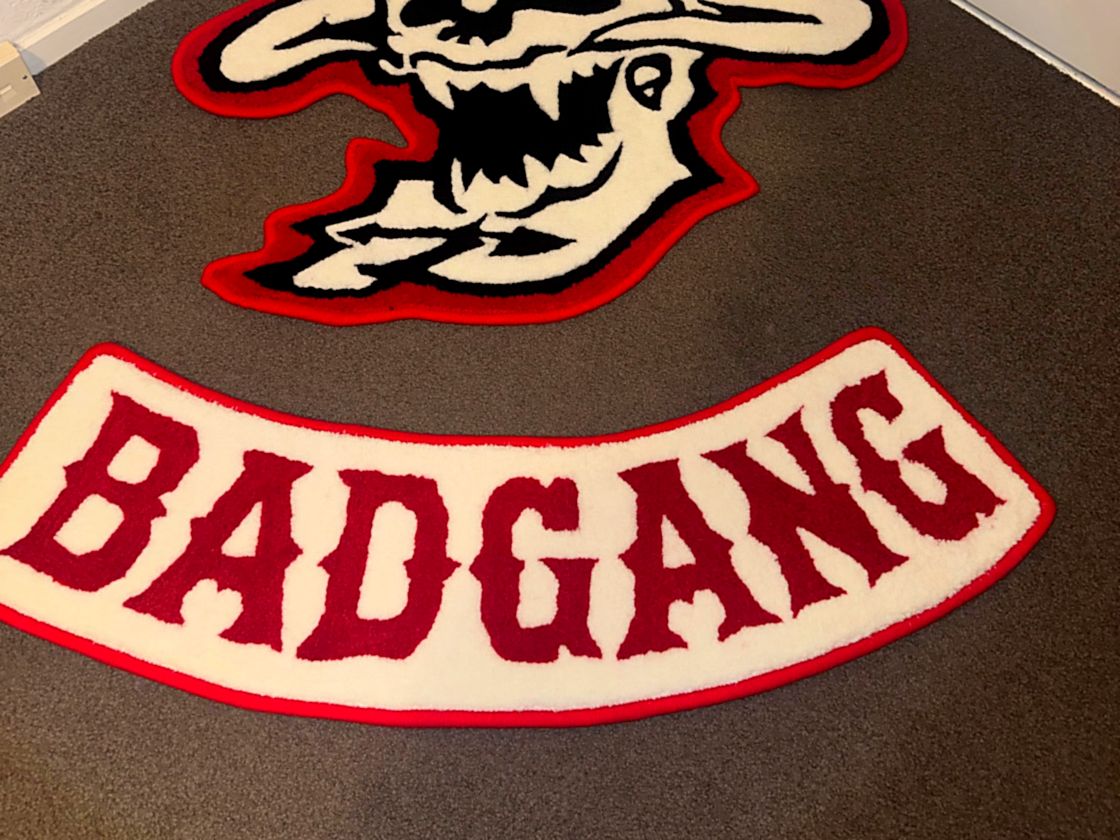
- Emblems, patches and club insignia
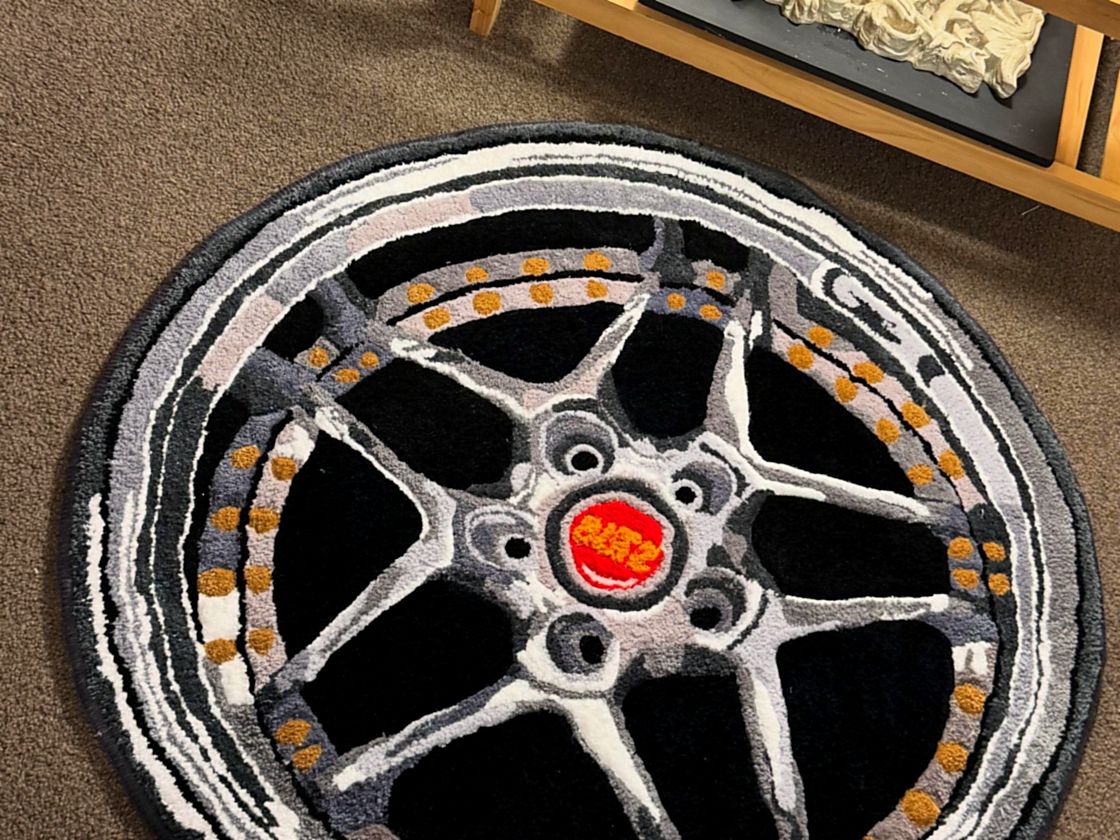
- Objects: anything with a clear edge to follow
Sizes so far have run from a 32cm badge up to pieces over a metre. A wall piece and a floor piece are made the same way, so tell us which it is and the backing changes to suit.
Your brand, on the floor.
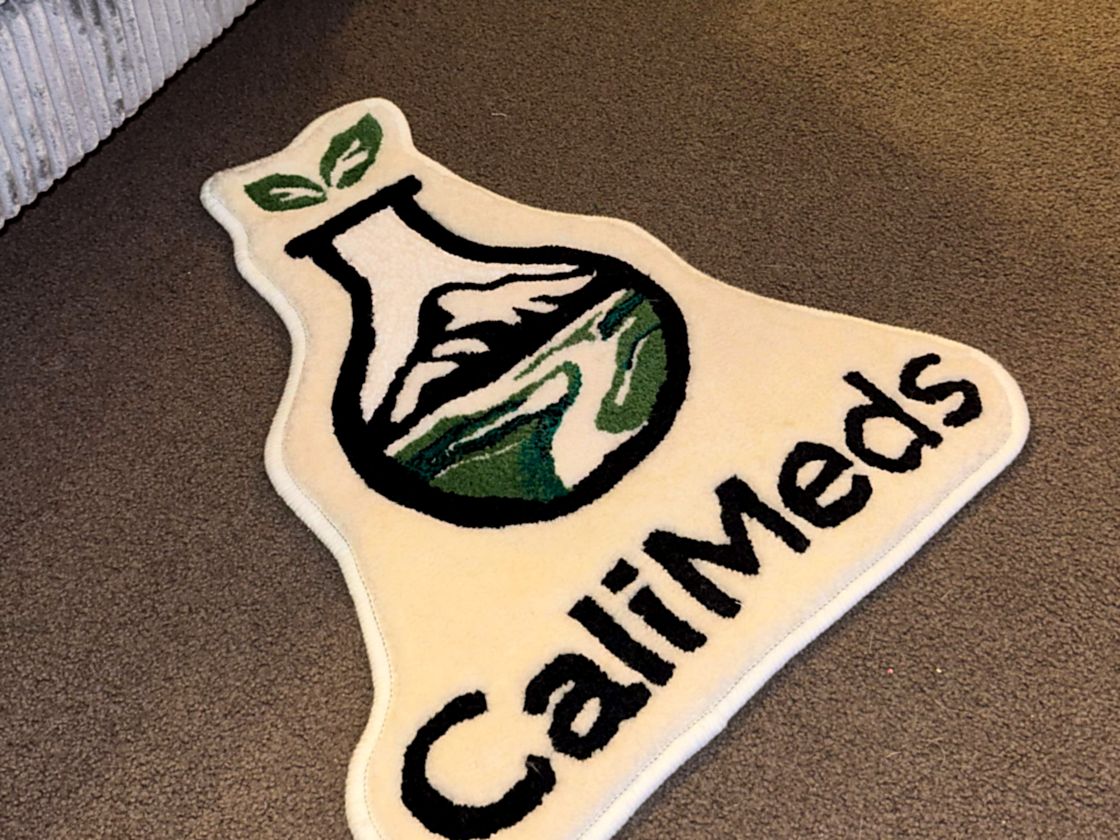
A logo rug does what a printed mat cannot. It is the actual shape of your mark, in your actual colours, and it lasts. Most of the studio's work now is commissions for businesses.
- Shop, bar, studio and showroom floor pieces
- Wall and window displays, made the same way with a lighter backing
- Colours matched from your brand guide rather than approximated
- Repeat runs when you have more than one site
Recent commissions include Cali Meds, Haze Pharma and Organic Genetics, an 86cm piece for BIBI Karaoke Bar in the Auckland CBD, and chapter patches for TGA.
Wool, acrylic, and how it gets finished.
Yarn is chosen for the job rather than for the invoice. A floor piece in a bar wants different fibre from a wall piece in a lounge, and the two cost about the same to make.
- New Zealand wool. Strong, springy and hard wearing. It keeps its texture underfoot, and it is renewable and biodegradable.
- Merino. Softer hand and deeper colour, for pieces that get looked at more than walked on.
- Wool and acrylic blends. The widest colour range, which is usually what brand matching needs.
- Cotton. A flatter, crisper finish where the design is all line work.
Carved or raw. Carving cuts shadow lines into the pile so detail still reads from standing height. Raw leaves it flat and graphic. Both are offered, and we will tell you which one we would pick for your design.
Four steps, no surprises.
Send the artwork
A logo file, a sketch, a screenshot or a photo. Rough is fine at this stage.
Get a price
A real figure and a realistic timeframe, usually back within a day or two.
Approve the design
You see the outline, the size and the yarn colours before a single row is tufted.
Made and handed over
Progress photos as it goes, then tufted, carved, bound, backed and trimmed.
Turnaround depends on size and how busy the bench is. You get a date, not a guess.
Got a logo, a name or an idea?
Send whatever you have. A rough sketch is enough to price from, and working out what the piece wants to be is part of the job rather than an extra.